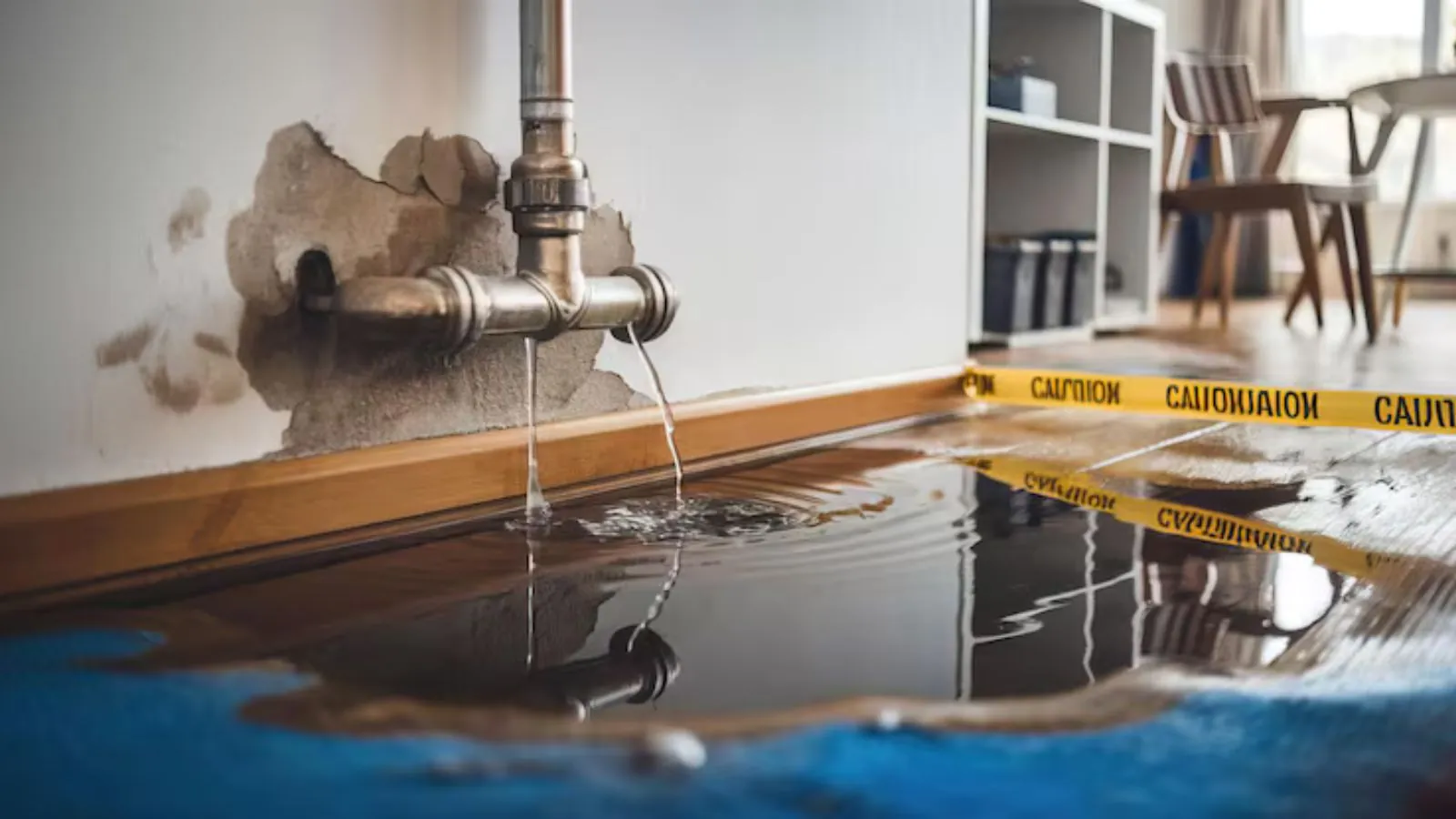
What an assessment is for
A water damage assessment answers four questions. Where did the water come from, how far has it spread, what category of water is it, and what can be dried versus removed. The answers set the scope of the work and the price, which is why a rushed guess in the first minutes is rarely as useful as a measured one.
The visible stain is only part of the story. Water follows framing, wicks up drywall and runs under flooring. A proper assessment looks past the surface to find all of it.
Step 1: Safety and the source
The crew confirms that the source has been stopped and that the area is safe to enter. Electrical hazards, ceiling sag and contaminated water are checked first. If power is on in a wet room or a ceiling is bulging, the work waits until the hazard is handled.
Step 2: Moisture mapping
Moisture meters read the moisture content of drywall, wood and concrete. A thermal imaging camera shows cool, wet areas behind surfaces. Together they let the crew draw a map of the wet zone, often much larger than the stain you can see. Readings are recorded as a baseline.
| Tool | What it shows |
|---|---|
| Pin or pinless moisture meter | Moisture content of drywall, wood and subfloor. |
| Thermal imaging camera | Cool, wet areas behind walls and under floors. |
| Hygrometer | Humidity and temperature of the air. |
| Visual and odor check | Staining, sagging, visible growth, smell. |
Water on the floor right now?
Call the 24/7 line while you read the next steps.
Step 3: Water category and class
ANSI/IICRC S500 describes three water categories. Category 1 is clean water from a supply source. Category 2 has some contamination, such as washing machine or dishwasher water. Category 3 is grossly contaminated, such as sewage or flood water. Category can worsen over time if water sits.
The standard also describes classes of water damage based on how much material is wet. The category and class guide how much is removed and how much drying equipment is used. See our flood page and sewage backup page for Category 3 work.
Step 4: What to save and what to remove
With readings in hand, the crew decides which materials can dry in place and which have to come out. Clean-water drywall caught early can often dry in place. Soaked insulation, saturated pad and anything touched by contaminated water is usually removed. The reasons are written into the scope.
Step 5: The written scope and price
You should receive a clear scope that lists the rooms, the work and the equipment. Price and scope are explained before work starts. If anything is unclear, ask. A crew that does not want to explain the scope is a warning sign.
What you can do before the crew arrives
- Stop the source and note where it came from.
- Keep a list of the rooms that are wet and which materials are involved.
- Photograph the damage.
- Remove valuables from wet areas.
- Have your insurance information ready.
To start an assessment, call (636) 747-8964. The dispatcher asks about the source, the rooms and the time since the loss, then sends a crew as soon as one is available.
What a good assessment report contains
After the first visit you should be able to see the moisture readings by room, the category and class of water, the materials to be removed and the equipment to be placed. Photos tie each reading to a location. A report like that lets you compare scopes, answer an adjuster and check progress at each return visit.
If a crew cannot explain why a material is coming out, ask for the reading that supports it. Removal should follow the numbers and the category, not habit.
Questions to ask the crew
- What water category and class do you see, and why?
- Which materials will be removed, and what readings support that?
- How many drying units will be used and for how many days?
- How will you share readings and photos?
- What happens if you find more damage after opening a wall?
These questions are fair to ask and a reliable crew answers them without hesitation. The answers belong in the written scope.
SafetyWhat to do before help arrives
- Stop the source and clear the path to the wet area.
- Secure pets and keep children out of wet rooms.
- Gather photos, dates and any plumber or insurer notes.
- Do not remove wet materials before the crew has seen them.
- Write down the rooms you want checked.
Assessing homes around Saint Peters
Houses in the Saint Peters area range from older ranch homes to newer builds near Mexico Road and Mid Rivers Mall, and the framing and finishes differ. A newer home may have engineered flooring and open framing, while an older one may have plaster or older insulation. The assessment accounts for those differences room by room.
The same assessment steps apply in Bridgeton and Cottleville. If you are unsure whether you need one, call and describe what you see.
Local questions from Saint Peters homeowners
How long does an assessment take?
A single room takes less time than a whole house. Moisture mapping is done on the first visit, and the crew continues to take readings at each return visit until the structure is dry.
Do I have to be home for the assessment?
It helps, because you can point out where the water started and what is valuable. If you cannot be there, the dispatcher arranges access and a point of contact.
Is a thermal camera enough on its own?
No. A thermal camera shows temperature differences, which often match wet areas, but a moisture meter confirms the moisture content. Both are used together.
Will the crew open walls during the assessment?
Not always. Many readings are taken without opening anything. Small inspection holes or removing baseboards may be used to reach a cavity when readings suggest moisture inside.