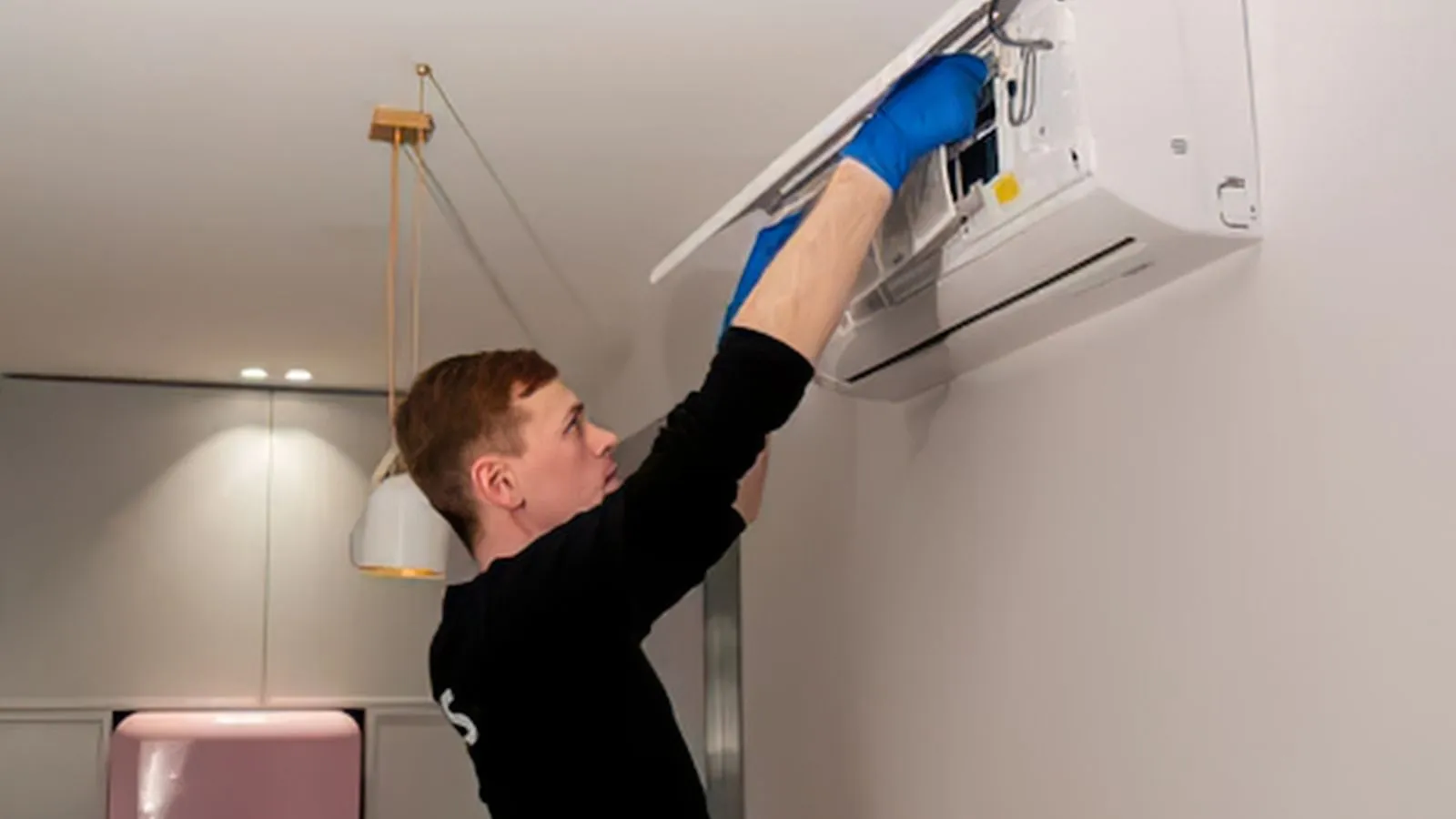
Where AC leaks start and what they wet
Air conditioning produces water as it cools the air, and that water leaves through a condensate drain. When the drain clogs, freezes or runs at the wrong slope, the drain pan fills and overflows. The result is an AC leak water damage problem in a ceiling, a closet floor or an attic floor, usually in a spot where nobody looks.
The call-in language is consistent. People describe a ceiling stain that keeps growing, a wet closet carpet, a musty smell near an air handler or a drip from a vent. If your system is in an attic or a closet in Saint Peters, a quick look at the drain pan often explains it.
Clogged condensate line
Algae and debris block the line, and the pan overflows slowly over days.
Frozen evaporator coil
Ice builds up when airflow is poor, then melts into the pan faster than it can drain.
Cracked or rusted drain pan
Older metal pans corrode and leak even when the line is clear.
Poor slope or loose connections
A line that does not slope enough or has a loose fitting leaks at the joint.
What to do the moment you see a drip
- Turn the system off at the thermostat. If water is still dripping, switch off the breaker for the air handler.
- Place a bucket under the drip and move furniture and belongings out of the way.
- Check the drain pan if you can reach it safely, and photograph any standing water.
- Call an HVAC technician for the equipment and the restoration line at (636) 747-8964 for the wet materials.

How the water damage is dried and repaired
AC leaks usually involve clean condensate water, but it picks up dust and organic material in a pan or an attic. The crew uses moisture meters and a thermal imaging camera to find where the water traveled, because it often follows ducts and framing. Wet insulation above a ceiling is removed, and ceiling drywall that has softened or sagged is cut out.
Air movers and dehumidifiers then dry the area until readings reach the dry standard. Repairs follow the same path as other ceiling or wall damage. See ceiling water damage repair for stains and sagging, and wall and drywall repair for closet and wall damage.
| Where the unit sits | What is usually wet |
|---|---|
| Attic | Insulation, the ceiling below, framing around the air handler. |
| Closet or utility room | Carpet, baseboards, lower drywall. |
| Basement or garage | Floor, stored items, nearby walls. |
| Roof or exterior unit | Line connections and the interior wall they pass through. |
AC condensate leak?
Call the line. Scope and price are explained before work starts.
Bridge to mold: stains that keep returning
If a stain returns after a ceiling is painted, the moisture source is probably still active. Several callers describe a leak that led to mold in a closet or on a ceiling. Mold remediation follows S520 practice and only works once the source is fixed. See mold remediation for how assessment and testing work.
CostCost factors and insurance
Cost depends on how long the leak ran, whether insulation or drywall was saturated and how many rooms were involved. Scope and price are explained before work starts. Insurers often treat a long-running condensate leak as maintenance, so ask your insurer how your policy treats gradual damage.
Local NoteAC leaks in Saint Peters summers
Cooling systems in the St. Louis area run hard through summer, which means more condensate and more chances for a clogged line to overflow. Have the system serviced before the season, clear the drain line and put a float switch in the pan. An overflow that stains a ceiling in July can quietly keep going while you are at work.
The same condensate leaks happen in homes across Cottleville and the rest of St. Charles County, and the 24/7 line sorts out whether a crew is needed now or can wait for the HVAC technician.
Common QuestionsAC leak questions from Saint Peters homeowners
Why is my air conditioner leaking water into the ceiling?
The most common reason is a clogged condensate drain line, which sends water into the drain pan until it overflows. A frozen evaporator coil that thaws, a cracked pan and a poorly sloped line can also cause leaks. An HVAC technician fixes the equipment and a restoration crew dries what got wet.
Should I turn off the AC if it is leaking?
Yes. Switch the system off at the thermostat and, if water is still dripping, at the breaker. A running system keeps making condensate and can push more water into the pan.
Can AC leaks cause mold?
Mold needs moisture, and a slow condensate leak that keeps drywall damp can create the conditions for it. The EPA advises drying wet materials within 24 to 48 hours. If staining or a musty smell has been present for a while, ask about mold assessment.
Do you handle AC leak emergencies at night or on weekends in Saint Peters?
The line is answered around the clock. An AC leak is not always an emergency, but a ceiling that is sagging or dripping is, and the dispatcher helps you decide what to do while a crew is arranged.