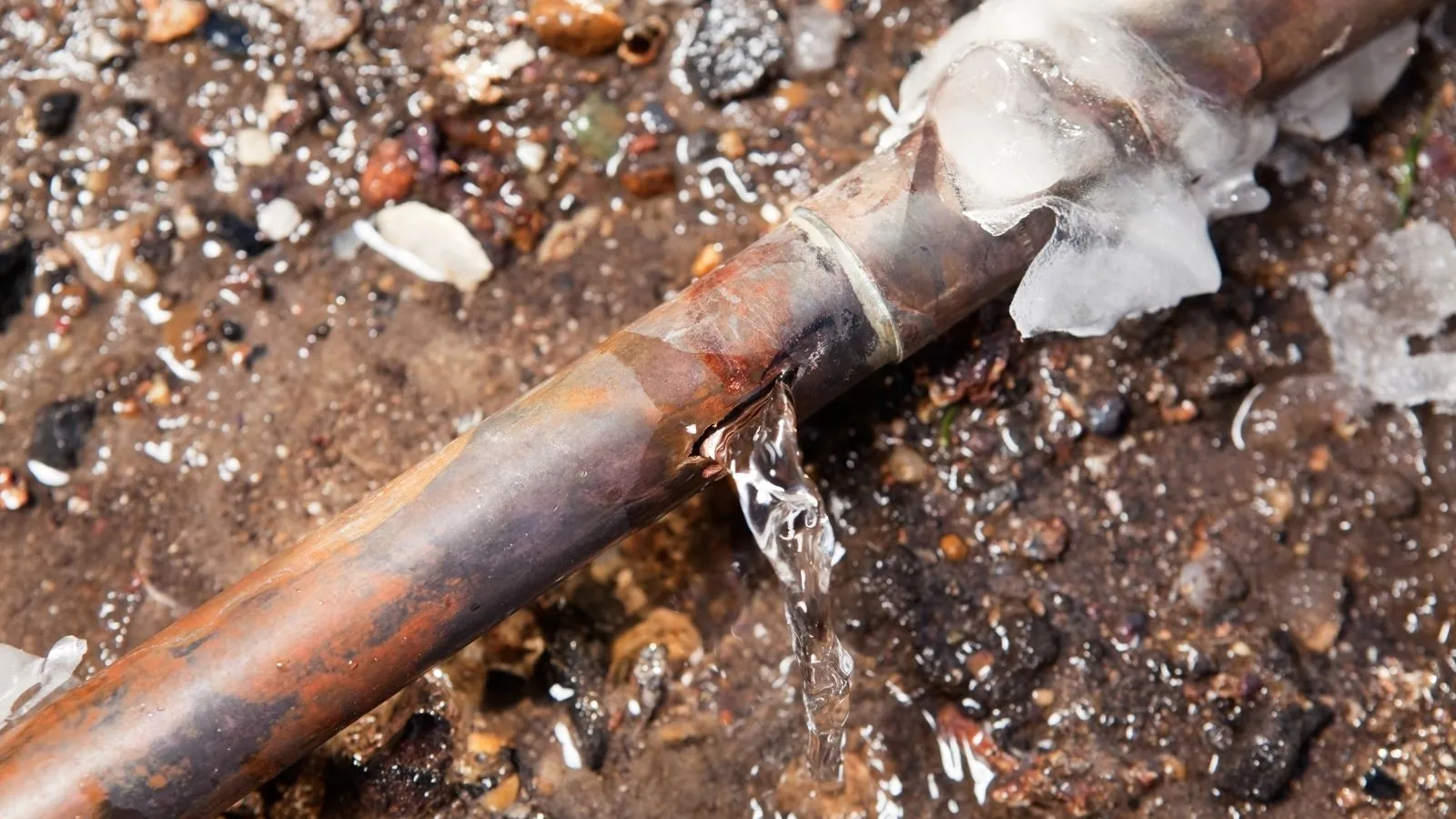
When a burst pipe is an emergency
A burst pipe is an emergency from the moment you hear it. Water under supply pressure keeps coming until the valve is closed, and it soaks drywall, insulation and subfloor in minutes. If you are in Saint Peters and water is spraying or pooling, call the 24/7 line at (636) 747-8964 and keep reading while you wait.
The dispatcher will ask where the water is, how far it has traveled and whether it is near electrical panels. Same-day response is the goal when crews are available, and after-hours calls are handled the same way as daytime ones.
- Close the main water valve. It is usually in the basement, a utility room or near the meter where the line enters the house.
- Open the lowest faucet in the house to drain the pipes and release pressure.
- If the broken line is on the hot side, switch off the water heater so the tank does not heat while empty.
- Cut power to wet rooms only if you can reach the panel without standing in water. Otherwise call the utility or 911 first.
- Move valuables and furniture away from the wet area and photograph everything before cleanup.
What a burst supply line does to a house
The signs are not always dramatic. Some supply lines fail with a spray, and others split slowly behind a wall. Either way the water travels along framing and ends up where you do not expect it.
Sound of running water
A hiss or drip when every fixture is off usually means a pressurized line is open somewhere inside a wall or ceiling.
A spinning water meter
Turn everything off and watch the meter. If it moves, water is leaving the system.
Wet or bubbling drywall
Paint that blisters or drywall that feels cool and soft is holding water behind the surface.
Stains on the ceiling below
A line that fails upstairs shows up as a brown ring in the room underneath, often with a sagging center.
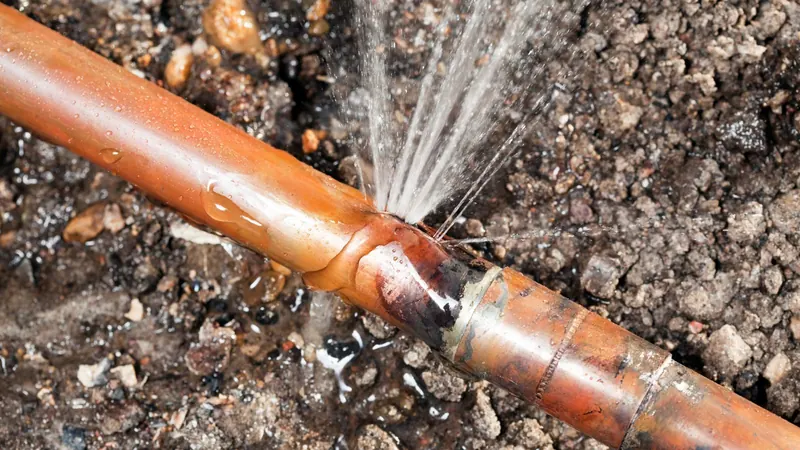
How the crew handles a burst pipe job
Once the water is off, the work follows ANSI/IICRC S500. The crew finds every wet area with moisture meters and a thermal imaging camera, because water from a pressurized line often travels well past the visible damage. Clean supply water is Category 1, but it can degrade to a worse category if it sits on dirty surfaces or soaks building materials for long.
Extraction units and wet vacuums take out standing water first. Wet insulation and soft drywall are cut out, since they hold moisture against the framing. Then air movers and LGR dehumidifiers dry the cavity and the room until readings reach the dry standard. The structural drying page explains the equipment and how long it usually stays.
| Material | Typical outcome |
|---|---|
| Drywall and baseboard | Cut out if soft or stained, otherwise dried in place with air movers. |
| Insulation in the wall | Usually removed and replaced when saturated. |
| Carpet and pad | Pad is usually removed, carpet may be dried or lifted depending on the water category. |
| Hardwood and laminate | Dried with specialty mats when caught early, replaced when boards have cupped. |
| Subfloor and framing | Dried to target readings, rarely replaced if treated quickly. |
Pipe still running?
Call the 24/7 line while you shut off the water. We explain scope and price before work starts.
Cost factors for a burst pipe job
The price depends on how long the water ran, how many rooms it reached and what it touched. A line that failed in a kitchen cabinet and was shut off in ten minutes is a very different job from one that ran overnight in a wall above a finished basement. Scope and price are explained before work starts, and you can describe the situation to the dispatcher for a sense of which factors apply.
Insurance generally treats a sudden pipe failure differently from a slow leak, so document the time you noticed the water, keep any broken fittings and ask your insurer what your policy says. The repair of the pipe itself is typically separate from the cleanup. For the rooms most often hit, see kitchen water damage and wall and drywall repair.
Local NoteSupply line failures around Saint Peters
Saint Peters has housing from older ranch homes to newer builds near the Mexico Road corridor and Mid Rivers Mall, so supply plumbing varies a great deal from one house to the next. Ask a plumber what material is in your walls and where the shutoff valves are, then label them. A homeowner who can close the main valve in ten seconds saves thousands of dollars of drywall.
Because the City of St. Peters has its own building department, a plumber will often check whether the repair needs a permit. That is a plumbing question rather than a restoration one, but it is worth asking before the walls are closed up. Neighbors in Cottleville and the rest of St. Charles County follow their own city or county rules.
SafetyWhat to do before help arrives
- Shut off the main water valve, then open the lowest faucet to drain the lines.
- Turn off power to wet areas at the breaker only if the panel is dry and you can reach it safely.
- Do not stand in water near outlets, appliances or cords.
- Move valuables and rugs out of the wet area.
- Photograph the damage before anything is moved.
Then call the line and describe what you see.
Common QuestionsBurst pipe questions from Saint Peters homeowners
Do you handle burst pipe emergencies at night or on weekends in Saint Peters?
Yes. The line is answered 24 hours a day, including holidays, and a burst pipe at 3 a.m. gets the same first steps as one at noon. Crews are sent as soon as one is available, and the dispatcher stays on the line while you shut off the water.
Who fixes the pipe, you or a plumber?
A plumber repairs or replaces the pipe. Restoration removes the water and dries the structure. Many homeowners call a plumber and the restoration line at the same time so the pipe is fixed while the drying starts.
Will my homeowners insurance cover a burst pipe?
Sudden and accidental pipe failures are often covered, while damage from a leak that went unnoticed for weeks often is not. Check your policy or ask your insurer. Photos, moisture readings and a written scope help the claim, and we never promise approval.
How soon after a burst pipe can mold start?
Mold needs moisture, and the EPA advises drying wet materials within 24 to 48 hours to avoid growth. That is why extraction and drying start as soon as the water is shut off rather than after the pipe is repaired.
Do I need a permit to repair a burst pipe in Saint Peters?
Permit rules vary by the type of plumbing work, so ask the City of St. Peters building department before the repair. Your plumber will usually know whether a permit applies to the job.