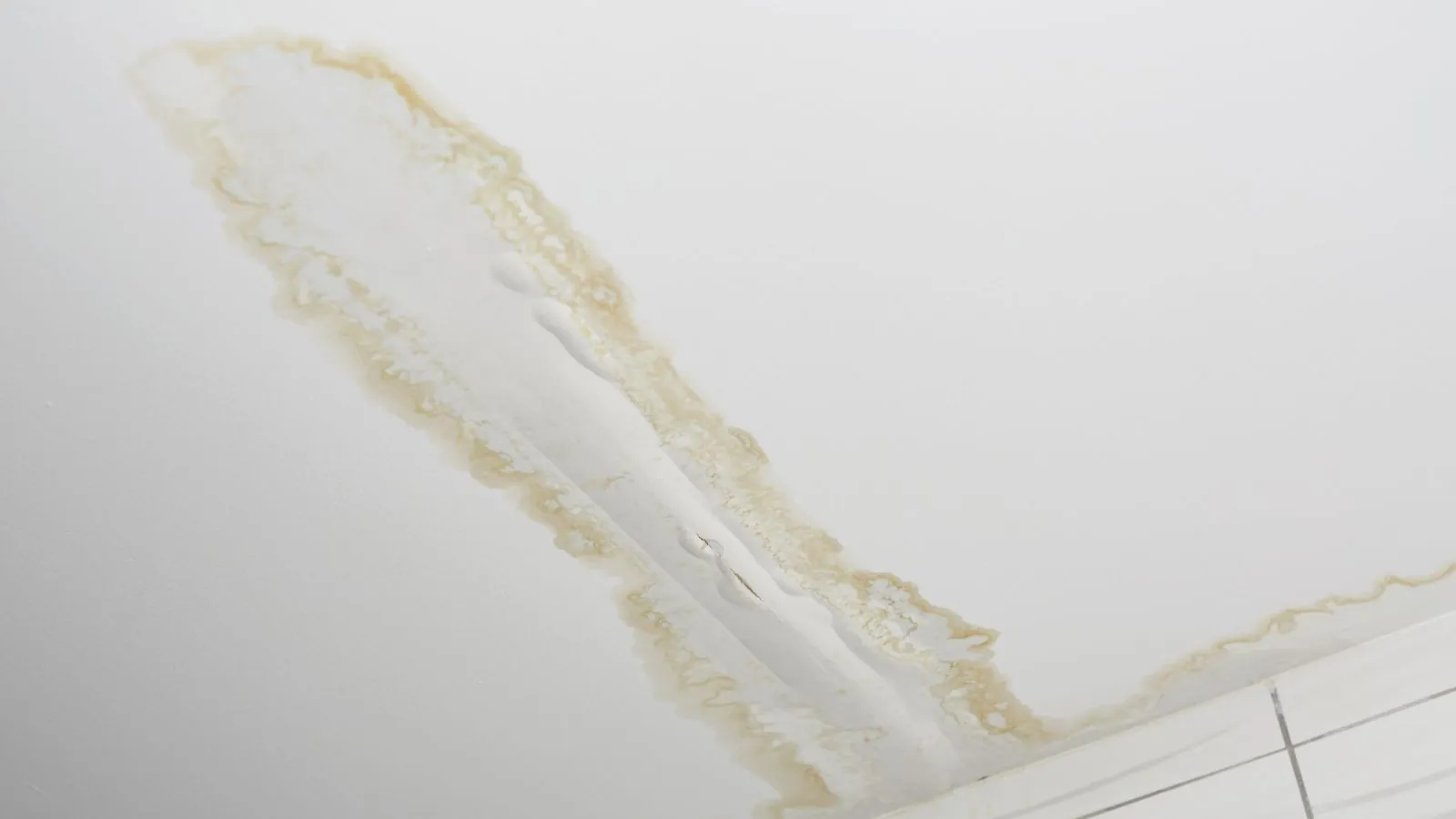
When a ceiling leak is an emergency
A ceiling that is dripping, bulging or sagging is an emergency because water is trapped in the drywall and insulation above it, and the weight can bring it down. If this is happening in your Saint Peters home, move people and belongings out from under it and call the 24/7 line at (636) 747-8964.
Do not use light fixtures or ceiling fans near a wet ceiling. If water is dripping from a fixture, switch off that circuit at the panel if you can reach it safely, and call an electrician or the utility if you cannot.
- Move people, pets and furniture out from under the wet ceiling.
- Put a bucket under the drip and a tarp over anything that cannot move.
- If the ceiling is bulging, drain it from the lowest point into a bucket, standing to the side.
- Shut off the water main if you suspect a supply line above and the leak is plumbing related.
- Photograph the stain, the bulge and any visible roof damage.
Finding where the water came from
Water often travels along a joist before it drips, so the stain may not sit under the leak. A roof leak, a pipe above, an HVAC drain and a bath or laundry room on the floor above all produce the same brown ring. The first job is to find the source, because drying a ceiling while the source is active just wastes the work.
Roof leaks
Missing shingles, failed flashing or ice dams let rain into the attic and onto the ceiling below.
Plumbing above
A supply or drain line in the floor above drips onto the ceiling below, often from a bathroom.
AC condensate
A clogged drain line overflows the pan in an attic. See AC leak water damage.
Condensation and ventilation
Poor attic ventilation puts moisture on the underside of the roof deck and onto insulation.
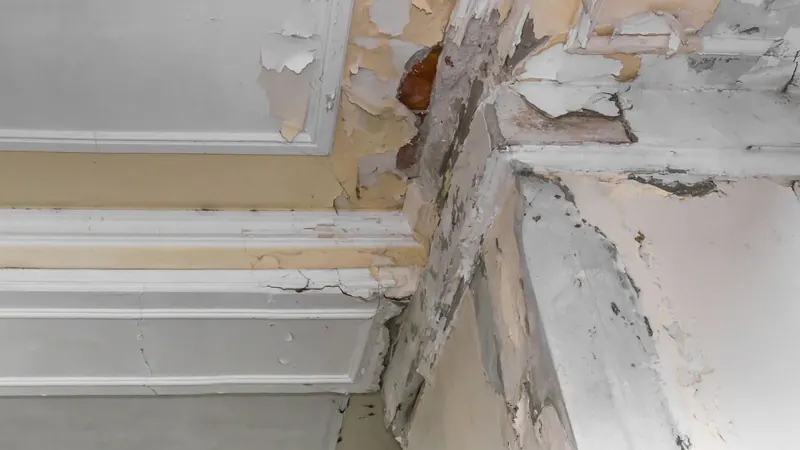
Roof leaks that reach the ceiling
Callers often ask about a roof leak, and the answer depends on which job is yours. A roofer stops water from entering and repairs shingles, flashing and decking. A restoration crew handles the interior side: removing wet insulation and ceiling drywall, drying the attic and the room, and checking for mold.
If the roof was damaged in a storm, a temporary tarp can slow the leak until a roofer arrives, and a storm event is often documented in an insurance claim. The storm water damage page covers what to photograph and how the sequence works.
Ceiling dripping now?
Call the line. Scope and price are explained before work starts.
How the ceiling is dried and repaired
The crew uses a moisture meter and a thermal imaging camera to map the wet area, then removes the ceiling drywall that has sagged, stained badly or lost strength. Wet insulation is taken out because it holds water against the framing. Air movers and LGR dehumidifiers dry the cavity, and the readings are logged each visit.
Repair follows drying. New drywall is hung, taped and textured to match, and the ceiling is primed and painted. That repair work is separate from the mitigation, which is why the scope matters for your insurer. For the walls beside the ceiling, see wall and drywall repair.
| What you see | Typical response |
|---|---|
| Small light stain, no sag | Find the source, dry in place, repair and repaint. |
| Brown ring that keeps growing | Source still active, open the area to inspect. |
| Bulge or sag | Drain it, remove the panel, dry and replace. |
| Peeling paint and musty smell | Check for mold, see mold remediation. |
Cost factors and insurance
Cost depends on the size of the wet area, whether insulation was saturated, how many rooms the water reached and how much repair work follows the drying. Scope and price are explained before work starts. Ask your insurer how it treats roof leaks from storms versus age.
Local NoteCeilings and roofs around Saint Peters
The St. Louis region sees heavy spring thunderstorms and winter freeze cycles, both of which stress roofs and flashing. After a storm, check ceilings in the rooms under the roof edge, around chimneys and skylights and below bathrooms. A small stain found early is much cheaper than a collapsed panel.
The same response is available in Cottleville and other nearby neighborhoods, and commercial roof leaks in the Earth City and Bridgeton industrial areas are covered on the commercial water damage page.
ANSI/IICRC S500 is the published standard for professional water damage restoration, and S520 covers mold remediation. This page names them as references only, so you can compare any plan you receive against the same yardstick.
Common QuestionsCeiling water damage questions from Saint Peters homeowners
Do you handle ceiling water emergencies at night or on weekends in Saint Peters?
Yes. The line is answered 24 hours a day. A ceiling that is sagging, bulging or dripping is treated as urgent, and a crew is sent as soon as one is available.
What should I do about a bulging ceiling full of water?
Stay out from under it. Place a bucket below and, if it is safe, poke a small hole at the lowest point of the bulge to let the water drain into the bucket, which can keep the whole panel from collapsing. Then call.
Does insurance cover a roof leak that stained my ceiling?
Sudden roof damage from a storm is often covered for the interior damage, while leaks from wear and age often are not. Photograph the stain and the roof if it is safe, and ask your insurer what applies.
Can a stained ceiling be painted over?
Not until the source is fixed and the area is dry. Paint over a damp ceiling traps moisture and the stain usually comes back. A moisture reading shows whether the drywall and insulation above are dry.
Is a brown ring on the ceiling always a roof leak?
No. It can come from a roof, a pipe, an air conditioner drain or a bathroom above. A restoration crew or plumber traces the source with moisture mapping before repairs start.