Is your house still wet after a leak?
Many people searching for structural drying do not use the phrase. They write that the wall still feels damp, the floor smells musty, the basement never fully dried or the paint is bubbling. Those are the signs of moisture left in the structure after the visible water is gone.
A musty smell
Persistent smell after cleanup usually means moisture remains in drywall, insulation or subfloor.
Swollen baseboards or trim
Wood and MDF absorb moisture and swell at the wall base.
Cool, damp-feeling drywall
Moisture in a wall lowers its surface temperature and softens the paper.
High humidity indoors
A house that feels sticky after a leak is releasing moisture from wet materials.
If you see those signs, a moisture meter and thermal imaging camera show what is wet. Ask also about mold if the smell has lasted more than a day or two.
The MethodHow structural drying works
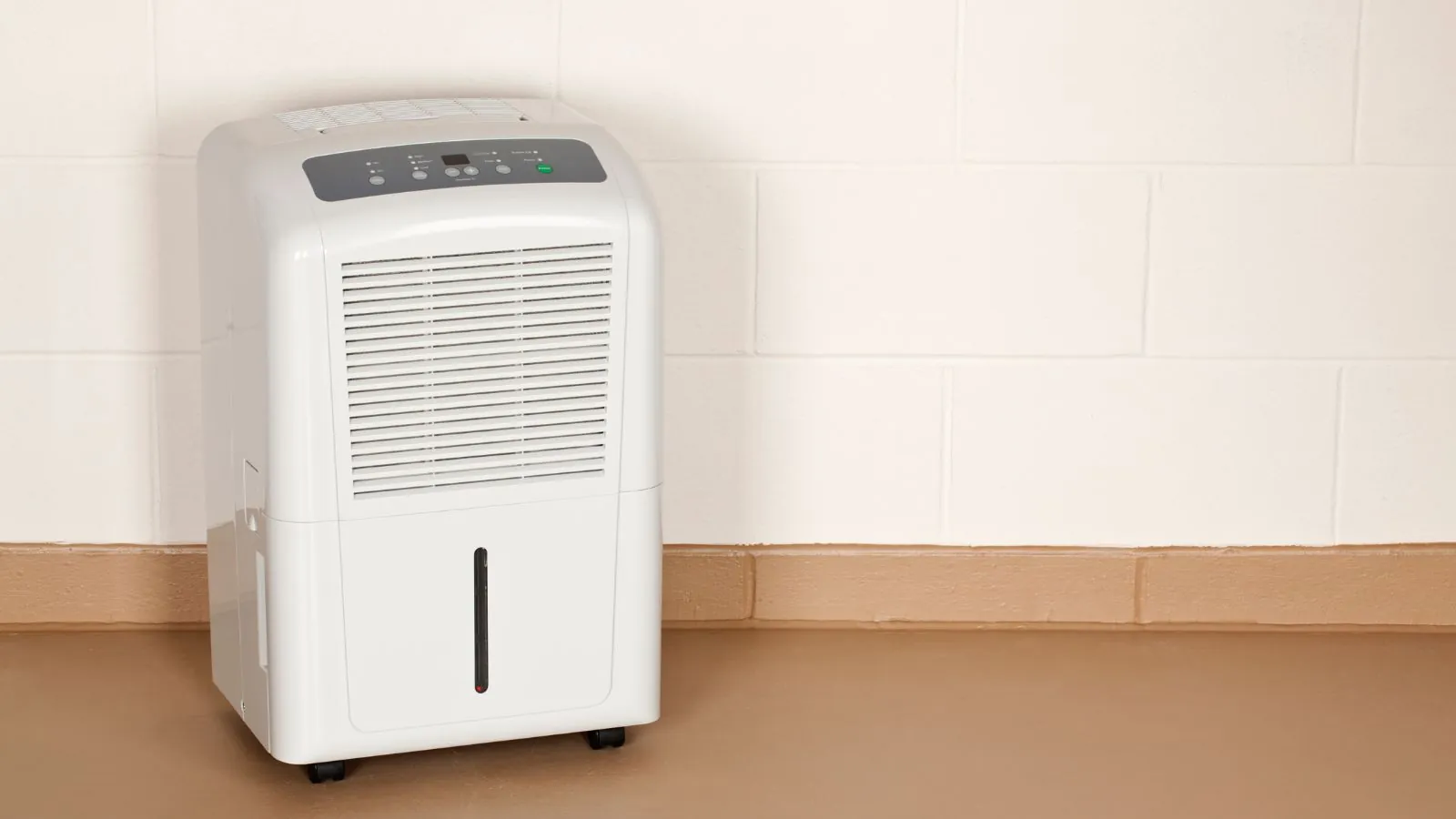
Drying follows the ANSI/IICRC S500 approach. Water leaves materials as vapor, and that vapor has to be removed from the air or it settles back into the structure. Air movers speed evaporation from surfaces, and LGR dehumidifiers pull the vapor out of the room so the air stays dry enough to keep evaporating.
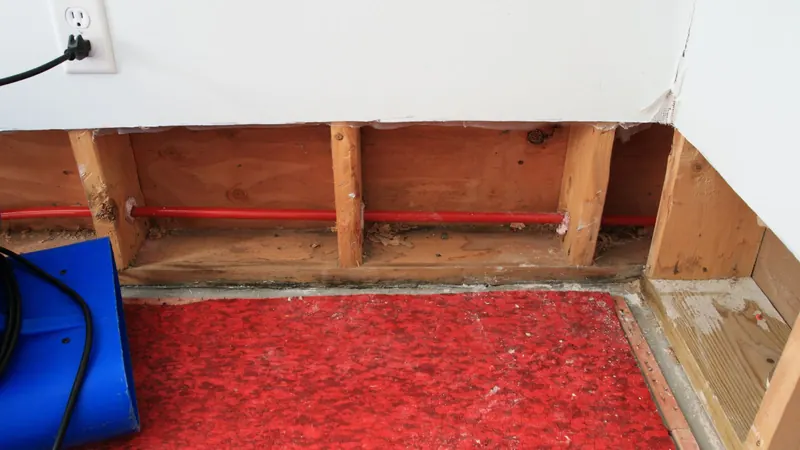
The crew places equipment according to the wet areas, not by a fixed formula. Wall cavities may be opened with small holes or by removing baseboards. Floor cavities can be dried with mats and ports. Moisture readings are taken each visit, and the equipment is adjusted until the structure reaches the dry standard set for that material.
| Equipment | What it does |
|---|---|
| Air movers | Push air over wet surfaces and into cavities to speed evaporation. |
| LGR dehumidifiers | Remove moisture from the air so drying continues. |
| Moisture meters | Show moisture content of wood, drywall and concrete. |
| Thermal imaging camera | Highlights cool wet areas behind surfaces. |
| Floor drying mats | Pull moisture out from under hardwood and laminate. |
Drying versus replacing
Not everything that got wet needs to be removed. Clean-water drywall that is caught early may dry in place, and solid framing almost always dries. Insulation, soft drywall and padding that stayed wet or touched contaminated water are usually replaced. The readings tell you which is which.
See wall and drywall repair for when to cut, hardwood floor damage for wood, and carpet water damage for pad and carpet.
Walls or floors still damp?
Call the line. Scope and price are explained before work starts.
Cost factors and insurance
Cost depends on the amount of equipment, the number of drying days, the size of the wet area and the materials involved. Scope and price are explained before work starts. Insurers often ask for drying logs, which show readings by date.
The crew keeps a log of each visit and the readings, and that record helps with a claim. We never promise approval.
Local NoteDrying in Saint Peters houses
Humid summers in the St. Louis region make drying harder, since the outdoor air does not help. Closed-up houses with air conditioning give dehumidifiers a controlled space to work, so keep windows closed while equipment runs. Basements and crawl spaces take longer, as covered in basement water damage and crawl space water damage.
This work happens after water extraction, and the same crew serves Cottleville and nearby areas.
A residential example is on the Spencer Creek page.
Common QuestionsStructural drying questions from Saint Peters homeowners
How do I know if my walls are still wet after a leak?
Signs include a musty smell, cool or damp-feeling drywall, peeling paint, baseboards that swell and a humid room. A moisture meter and a thermal camera show wet areas inside the wall without opening it.
How long does structural drying take?
Drying often takes several days, and the equipment stays until readings reach the target. The time depends on the material, the amount of water, the humidity and how quickly drying started.
Why can I not just run a fan and a household dehumidifier?
Household equipment moves far less air and removes far less moisture than commercial air movers and LGR dehumidifiers. It also cannot tell you when the structure is dry. Readings do that.
Will the equipment be loud and raise my electric bill?
Drying equipment is noticeable, and it does add to power use during the job. The crew explains the setup and the expected duration, and it comes out when the readings meet the standard.
Do you handle drying emergencies at night or on weekends in Saint Peters?
The line is answered around the clock. Most drying work follows extraction, and a crew is sent as soon as one is available.