What water does inside a wall
A wall is a cavity of drywall, studs, insulation and sometimes plumbing. When water enters, the paper face of the drywall absorbs it first, then the gypsum core softens. Insulation holds water against the studs, and moisture can climb above the visible line. Wall and drywall water damage repair starts with finding out how much of that cavity is wet.
Callers describe it in plain terms: a bubbled wall, a stain with a ring, paint peeling, a soft spot or a wall that smells musty. Each is a clue to the source and the stage.
Bubbled or peeling paint
Moisture behind the paint film pushes it off the surface.
Brown or yellow stains
Water carrying minerals or tannins dries to a ring on the wall.
Soft or crumbling drywall
The gypsum core has lost strength and must be replaced.
Cool, damp-feeling wall
Moisture inside lowers the surface temperature, detected with a thermal camera.
Dry in place or cut it out
| Condition | Typical response |
|---|---|
| Firm, slightly damp, clean water | Dry in place with air movers and dehumidifiers. |
| Bubbled paint, firm drywall | Find source, dry, then repair paint. |
| Soft or crumbling drywall | Cut out above the wet line and replace. |
| Wet insulation | Remove and replace after drying the cavity. |
| Contaminated water | Remove drywall and insulation, see sewage backup. |
The cut line is set by moisture readings, usually a few inches above the highest wet point. Cutting a clean strip lets the studs and cavity dry faster than trying to dry through intact drywall.
How walls are dried and repaired
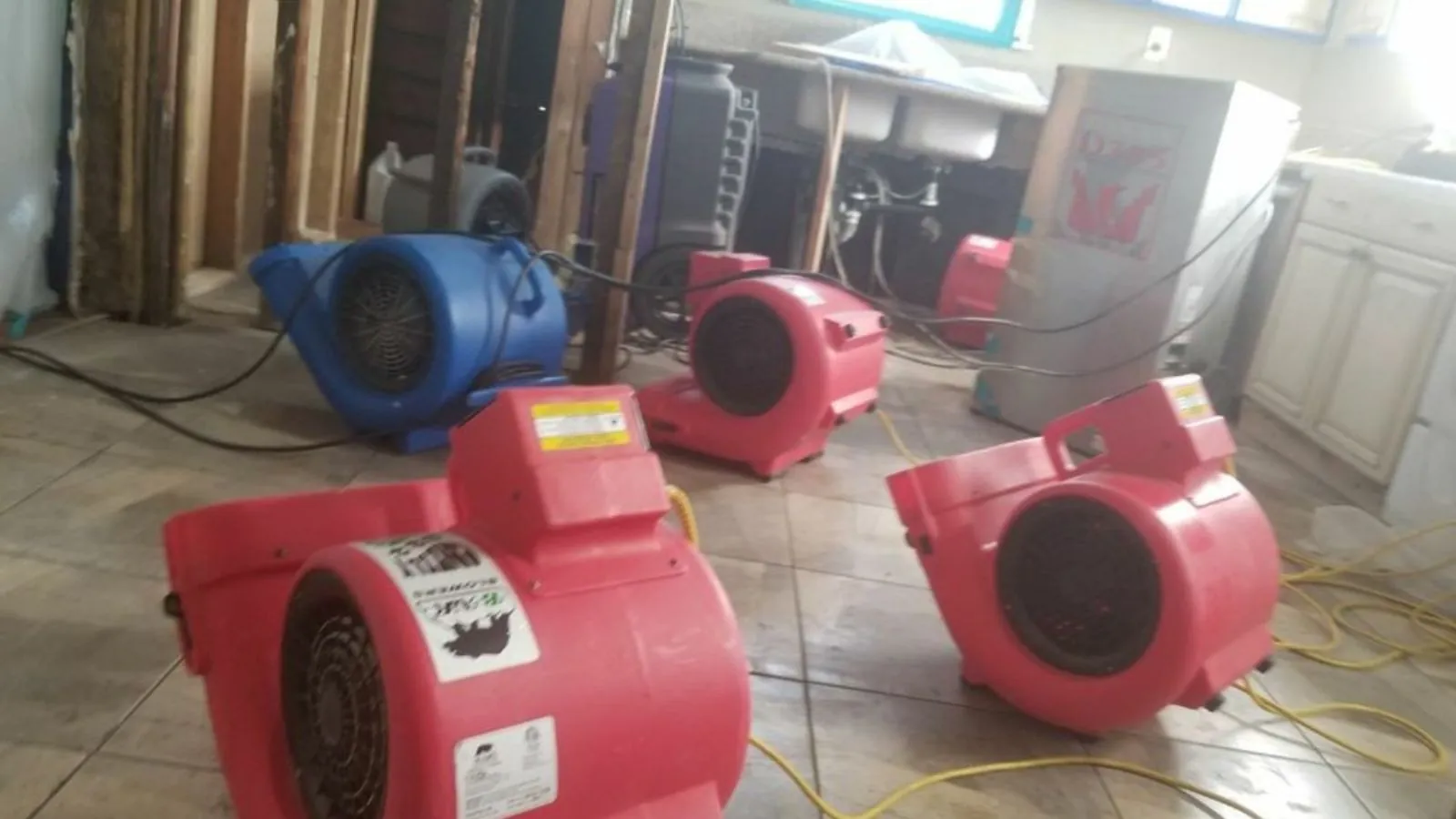
The crew removes the baseboard, cuts the wet drywall, takes out wet insulation and sets air movers to push air through the cavity. LGR dehumidifiers pull moisture out of the room. When the studs reach the dry standard, new insulation and drywall are installed, then taped, textured, primed and painted.
Water often comes from the ceiling above or from a pipe inside, so the source matters. See ceiling water damage, burst pipes and structural drying. If a musty smell or dark spots remain after drying, read about mold remediation.
Wall bubbling or soft?
Call the line. Scope and price are explained before work starts.
Cost factors and insurance
Cost depends on the length of wall affected, how high the water climbed, whether insulation was wet and how much repair and painting follows. Scope and price are explained before work starts. Mitigation and repair are often separate lines in a claim.
VariablesInsulation, plaster and other wall types
Not every wall is simple drywall over open framing. Older homes may have plaster and lath, exterior walls have insulation and a vapor layer, and bathroom walls may hold tile backer board. Each behaves differently when wet, and the crew chooses cutting and drying methods to suit the build.
Ask what the wall is made of if you are not sure. A clear answer shapes the scope and the price.
Local NoteWalls in Saint Peters houses
Walls near bathrooms, kitchens and laundry rooms take the most hits in houses around Saint Peters. If you plan to repaint a stained wall, run a moisture meter over it first or ask a pro to confirm it is dry. A wall that looks fine can still be wet inside.
The same service is available in Cottleville and nearby neighborhoods. For wet floors beside the wall, see hardwood floor damage and carpet water damage.
SafetyWhat to do before help arrives
- Stop the source of water.
- Do not puncture a bulging wall or ceiling without a plan for the water inside.
- Turn off power to the area if outlets in the wall are wet.
- Move furniture away from wet walls.
- Do not paint over stains until the wall is dry.
Wall and drywall questions from Saint Peters homeowners
Can water-damaged drywall be dried instead of replaced?
Sometimes. Clean-water drywall that is caught within a day or two and still firm may dry in place. Drywall that is soft, crumbling or stained from contaminated water is usually cut out.
Why is the paint bubbling on my wall?
Bubbling means moisture is behind or inside the paint layer, often from a leak in the wall, high humidity or water that wicked up from below. Find the source before repainting.
How far up does water travel in a wall?
Drywall wicks water upward, so the damage can be higher than the visible wet area. Moisture mapping shows how far, and the cut line is usually above it.
Should I paint over the stain?
Not until the source is fixed and the wall is dry. Paint over damp drywall traps moisture and the stain returns.
Does insurance cover drywall repair after a leak?
Sudden leaks that damage drywall are often covered, while slow leaks over time often are not. Photograph the damage and ask your insurer.